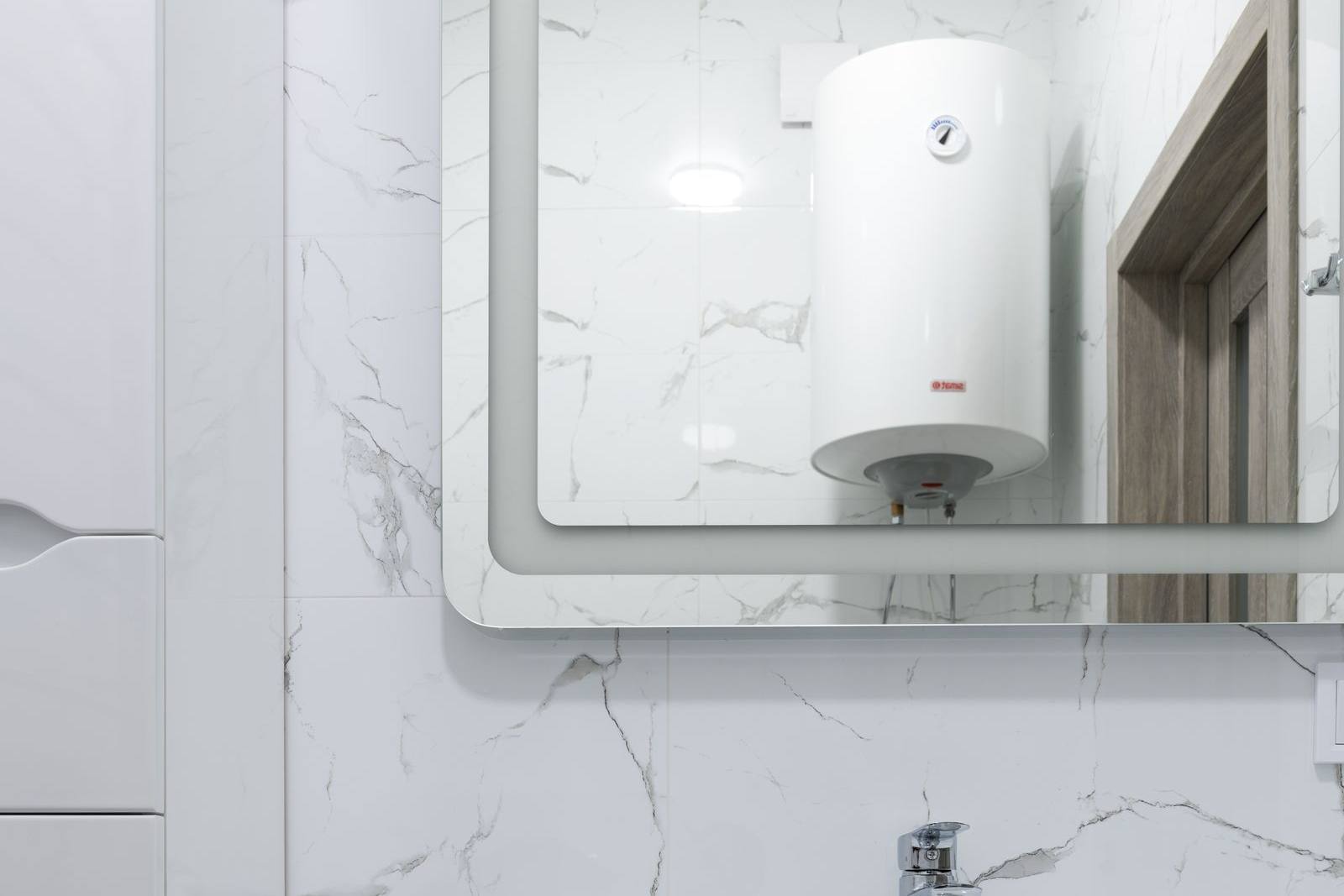
Tankless water heaters in Sacramento
A tankless heater does not store hot water — it heats water as it flows through, so hot water does not run out the way a tank can. That is the appeal, and it is real. The trade-off is that a tankless unit is more sensitive to the local water and climate than a tank is, and in Sacramento those two things matter more than most buyers expect.
Sacramento's city water is moderately hard — the City of Sacramento's reports put average hardness around 63–83 parts per million, about 4–5 grains per gallon, drawn mostly from the American and Sacramento rivers. Well-blended supplies in parts of the county test harder. Even at the moderate end, that is enough mineral load to build scale in a tank or a tankless heat exchanger over a few years.
Sacramento summers are long and hot, regularly past 100°F, and many heaters sit in garages or attics that bake all summer. Winters are mild and wet, with occasional frost. California also requires water heaters to be secured with seismic strapping, so any replacement here involves strapping and bracing.
What tankless is good for here
Tankless suits homes that run out of hot water with a tank — large families, homes with several bathrooms used at once, and homes where the tank is undersized for the household. It also suits homes short on space: a tankless unit mounts on a wall and frees the floor space a 40- or 50-gallon tank takes up. For homes in Sacramento with a single bathroom and a working tank, the case for switching is weaker, and a good provider will say so.
Sizing is the part that goes wrong
A tankless heater is sized by flow rate and by the temperature rise it must deliver — the difference between the incoming cold water and the 120°F or so you want at the tap. In Sacramento, that rise is larger in winter than in summer, because inlet water arrives colder. A unit sized for summer conditions will underperform in January. The right question to ask a provider is not the brand but the flow rate at your winter inlet temperature, for the number of fixtures you run at once.
Descaling is not optional
In hard-water areas, a tankless heat exchanger scales up faster than a tank does, because the water flashes to a high temperature across a compact exchanger. Manufacturers generally recommend descaling once a year; in the hardest water that interval can be shorter. A tankless unit that has never been descaled will lose flow, throw error codes, and eventually fail early. Annual maintenance — flushing and descaling — is part of the cost of owning one here. See the maintenance page for what a tune-up includes.
Repair or replace?
- - Repair is usually right for a single fault — an ignition failure, a sensor, a flow problem, or a scaled exchanger that can still be descaled.
- - Replacement is usually right when the heat exchanger is heavily scaled or cracked, when parts are no longer available, or when the unit was undersized from the start and has never kept up.
Frequently Asked Questions
Is tankless worth it in Sacramento?
It depends on the household and the water. Large households that run out of hot water benefit most. Homes with hard water need to budget for annual descaling — without it, the savings disappear into repairs.
How long does a tankless heater last?
Tankless units often last 15–20 years, but only with regular descaling where the water is hard. Without maintenance, scale shortens that considerably.
Can a tankless unit replace my tank directly?
Usually yes, but the gas line, venting, and electrical supply may need upgrading — a tankless unit draws far more gas or power at full flow than a tank does. The provider who responds to your request can assess what your home needs.
Which areas do you cover?
Sacramento and the other cities on the service area page — 132 ZIP codes in total.